How WETA launched WETA+
In launching WETA+, WETA faced a challenge familiar to many public media stations: how do you introduce a new product into a marketplace that audiences already find confusing?
Takeaways for public media stations
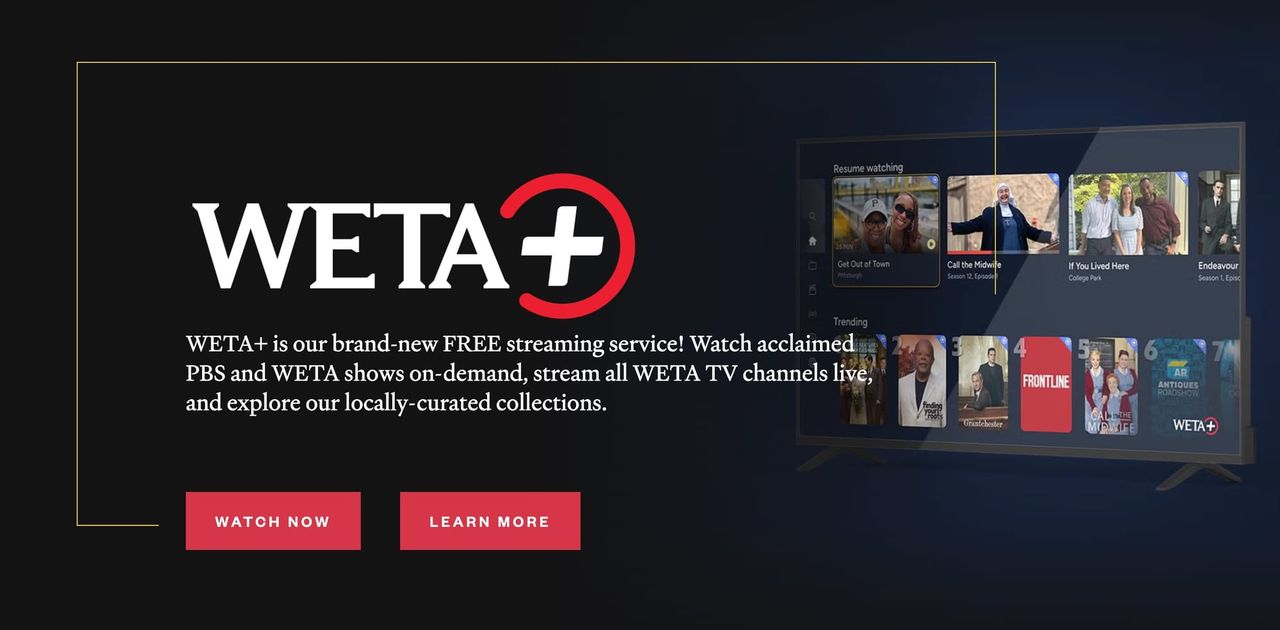
In launching WETA+, WETA faced a challenge familiar to many public media stations: how do you introduce a new product into a marketplace that audiences already find confusing? With the PBS app and Passport already in the ecosystem, and the WETA brand well established, adding a fourth brand into the mix risked leaving viewers at a loss to understand the differences between them all. Here’s how WETA navigated that challenge:
Start with clarity
The first priority was making sure audiences understood exactly what WETA+ was. To do that, we created a dedicated introductory video that clearly defined the app and its purpose. The goal wasn’t just to promote, but to educate as well. Before audiences could be excited about app, they needed to understand why it was different from their existing options, how it would improve their viewing behavior and how it still functioned within their existing station memberships.
WETA+ promotion to keep fans of The American Revolution streaming
Make a clean break
On July 1st, WETA executed a hard brand switch. From that date forward, all on-air promotion shifted exclusively to WETA+. Aside from mentions that were already baked into the programming, the PBS App was no longer mentioned. This kind of clean transition sent a clear signal to audiences and internal teams alike: this is the new direction. The hard cutover date, rather than a long transition period of mixed messaging, forced clarity and commitment about what we were offering and why.
Lead with value propositions — and vary them
Rather than running a single promotional message, WETA built out a suite of spots of varying lengths, each highlighting different reasons to download the app. The core value propositions included:
- It’s local: WETA+ is programmed specifically for the DC audience, not a generic national feed.
- It’s free: a simple, powerful message that removes a key barrier to adoption.
- It’s curated: exclusive collections assembled specifically for the WETA audience.
By rotating different messages, WETA was able to break through the noise over time. Not every viewer responds to the same pitch, and having a library of targeted spots allowed us to meet internal objectives and different audience segments where they were.
WETA+ value proposition spot: Best of 2025
Convert your broadcast audience first
WETA’s first target audience wasn’t cord-cutters or streaming natives, but existing broadcast viewers. The reasoning: these were the people most likely to convert because they already trusted the brand and watched the content.
The team leaned into contextual promotion to make that conversion feel natural:
- Viewers watching news programming saw promos for the news and documentary Collections
- Viewers watching period dramas saw promos highlighting the period drama Collection on the app
WETA+ promotion to keep fans of The American Revolution streaming
This approach turned on-air inventory into a precision tool, meeting viewers with relevant messaging at exactly the right moment.
Use data to iterate in real time
One of the biggest advantages of a streaming app is the first-party data it generates. WETA used that data actively throughout the launch to spot problems and opportunities:
- Scrolling behavior: Analytics revealed that viewers weren’t scrolling past the top of the app as often as we’d hoped, missing a lot of available content. WETA responded by creating a spot specifically encouraging viewers to scroll down.
- The LG opportunity: Downloads on LG smart TVs came in higher than expected. WETA hadn’t prioritized LG in its initial rollout, but once the data made the trend clear, the team pivoted and began promoting LG availability explicitly. This turned out to be a meaningful point of differentiation: at the time, the PBS App was not available on LG, meaning WETA+ was the first opportunity many viewers in the DC metro area could stream PBS content natively on their LG TVs.
Data-driven insights are reflected in WETA+ promotions
The bigger takeaway
Launching a streaming app is more than a technology project. It’s also a communications challenge. The stations that succeed are the ones that invest as much in messaging clarity as they do in the product itself. By approaching this launch with a clear branding strategy, targeted value propositions, broadcast-first conversion, and data-driven agility, WETA was able to successful launch the app into our marketplace and find early success. It’s an approach we think any station can adopt.
James Williams
James Williams is VP of Audience Development at WETA in Washington, DC.